






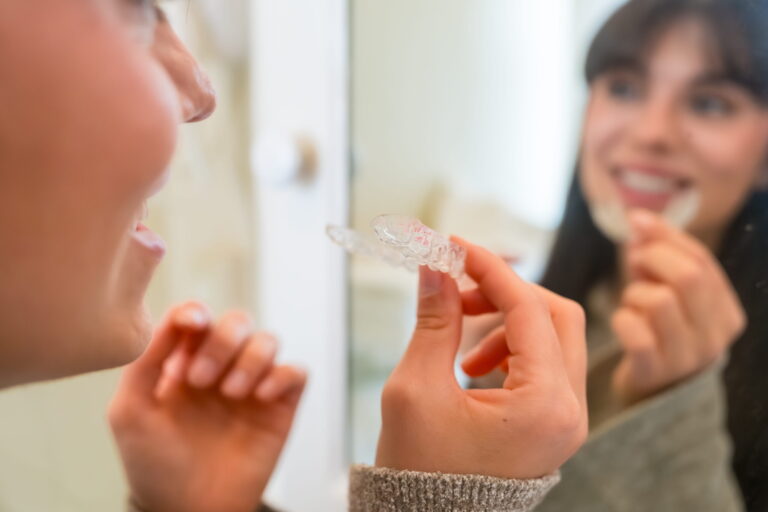


Key takeaways
- Each aligner tray is one small, pre-planned adjustment, much like a software update.
- Wear your aligners all the time, except during oral hygiene, aiming for a full 24 hours.
- Most treatment plans run between 6 and 12 months.
- Consistent wear is the single habit that keeps your timeline on schedule.
- A retainer protects your results once the active phase is complete.
Your phone hums at midnight. A quiet little update installs itself, and the next morning everything feels a touch smoother. Clear aligners work in almost the same spirit. Instead of one dramatic overhaul, your smile receives a steady stream of small, planned updates, each one nudging your teeth closer to the finished design. Let us walk through how this gentle technology reshapes a smile right here in Halifax.
At Lawen Dentistry in Halifax, Dr. Danny Lawen, D.D.S., is a Blue Diamond Invisalign Provider (‘Blue Diamond’ Invisalign provider is a status awarded by Align Technology to dental practices that treat a high volume of patients, typically over 300 patients a year).
Your Smile’s Weekly Update: What It Really Means
The quick answer up front
Your smile’s weekly update is simply the moment you move to a new aligner tray. Each tray carries the next set of tiny instructions, and because you wear your aligners all the time, except for oral hygiene, those instructions run continuously in the background. Over roughly 6 to 12 months, the updates stack up into a noticeably straighter smile.
Why we compare aligners to updates
Updates rarely change everything at once. They arrive in sequence, each building on the last, and you barely notice the work happening. Aligners follow the same rhythm. One tray is never meant to do the whole job. It handles a single step, hands off to the next tray, and the progress compounds. This mindset helps you relax, trust the plan, and avoid the temptation to rush. You can learn more about how this fits into Invisalign in Halifax and the tools we use through our technology.
How Clear Aligners Move Your Teeth, Step by Step
Each tray is a small, planned adjustment
Each aligner is shaped slightly differently from the shape of your teeth today. That subtle difference is the instruction. When you wear the tray, it applies gentle, steady pressure that guides specific teeth toward their next position. Nothing jumps ahead. The movement is measured and comfortable because it is spread across many trays rather than crammed into a few.
The role of your digital treatment plan
Before your first tray, a digital plan maps the entire journey. This blueprint shows where your teeth begin and the series of positions they will pass through on the way to the final result. Think of it as the full release schedule for your smile. Every tray you receive is one scheduled update within that plan, so each week has a clear purpose.
Why gradual movement matters
Gradual movement keeps the process gentle and predictable. Teeth respond well to light, consistent pressure over time, which is exactly what a sequence of aligners delivers. Trying to force faster change by skipping ahead does not help and can leave trays fitting poorly. Patience is not a side effect here. It is the design.
Your plan is created
We map your starting point and the full sequence of small movements your teeth will follow.
You receive your trays
Each tray represents one scheduled update in that sequence.
You wear and switch
Wear each tray all the time, except for oral hygiene; then move to the next on schedule.
Your smile updates
Small changes compound week after week into the final result.
The 24-Hour Wear Habit That Keeps Progress on Track
Wearing your aligners all the time, except for oral hygiene
The single habit that keeps everything on schedule is consistent wear. Aim to keep your aligners in all the time, except for oral hygiene. A full 24 hours of daily wear gives each tray the uninterrupted time it needs to do its small job. Those brief pauses to brush and floss are the only regular breaks your trays should take.
What happens if you fall behind on wear time
When aligners spend too long out of the mouth, teeth do not receive the steady pressure the plan relies on. The next tray may then feel tight or fit poorly because your teeth have not reached the position that tray expects. This is a lot like pausing an update halfway through. The system stalls and may need to catch up. Staying consistent prevents these delays and keeps your timeline smooth.
Simple routines to stay consistent
- Tie aligner wear to habits you already have, such as your morning and evening routine.
- Set a gentle phone reminder for the day you switch to a new tray.
- Keep your case with you so your aligners always have a safe home during oral hygiene.
- Track your switch days on a simple calendar so you never lose your place.
Your Treatment Timeline: 6 to 12 Months at a Glance
What influences the length of treatment
Most plans run between 6 and 12 months, and a few factors decide where you land in that range. The amount of movement your smile needs is the biggest one. Simpler adjustments often finish sooner, while more involved plans use more trays. Your consistency matters just as much. Faithful wear keeps you on the shorter, smoother path.
A week-by-week look at switching trays
| Phase | What is happening | Your role |
|---|---|---|
| Week 1 to 2 | Your first trays begin gentle movement | Build the all-day wear habit |
| Ongoing weeks | You switch to each new tray on schedule | Keep trays in except for oral hygiene |
| Check-in visits/ IPR | We confirm progress matches the plan | Attend appointments and share any concerns |
| Final trays | Teeth settle into their planned positions | Stay consistent to the finish line |
Check-ins at our Halifax locations/ Interproximal Reduction
Periodic visits let us confirm your smile is tracking with its plan. These check-ins are quick and reassuring, and they give you a moment to ask questions. If your case requires interproximal reduction this will be done mid-treatment. You can find details for our Spring Garden location when you plan a visit in Halifax.
Like a Software Update, Small Changes Add Up
Why you may not see changes right away
In the first weeks, you may not notice much, and that is completely normal. Each tray moves teeth by a small, deliberate amount. Just as a single update rarely transforms your phone overnight, a single tray will not transform your smile overnight. The magic lives in the accumulation.
Tracking progress over time
Progress becomes clear when you look across weeks rather than days. Comparing an early photo to a later one often reveals changes your mirror missed day to day. Your check-in visits add another layer of confirmation, since we can see how closely your smile matches the planned sequence.
Lessons from the tech world on steady updates
The tech world has long known that steady, incremental updates outperform rare, risky overhauls. Your smile benefits from the same philosophy. Consistency beats intensity. By trusting the sequence and keeping your aligners in, you let small gains compound into a result worth the wait.
Caring for Your Aligners and Your Oral Health
Cleaning your trays the simple way
Clean trays keep your smile fresh and your aligners clear. Rinse them under cool water and gently brush them, then let them dry before they go back in. Avoid hot water, which can distort the shape of the plastic and throw off the fit.
Keeping your teeth and gums healthy during treatment
Healthy teeth and gums are the foundation of a smooth plan. Brush and floss as part of your daily routine, especially before you place your trays back in. This keeps everything fresh and helps your gums stay comfortable throughout treatment.
Storing aligners safely between oral hygiene
When your aligners are out for oral hygiene, place them straight into their case. A case protects them from damage and keeps them clean until they return to your smile. A lost or cracked tray can interrupt your schedule, so a quick, consistent storage habit pays off.
What to Expect After Treatment
The move to retainers
Once your final tray finishes its work, your plan shifts from moving teeth to holding them in place. This is where a retainer steps in. It protects the smile you built by keeping your teeth in their new positions. You can review our retainer instructions to understand how to care for yours.
Protecting your results long-term
Teeth can gently drift over time if nothing holds them steady, which is why retainer wear matters so much. Following your retainer schedule is the long-term version of keeping your software current. A little consistency now protects the result you worked toward for months.
Starting Invisalign in Halifax, NS
Your first visit with Lawen Dentistry
Your first visit is a relaxed conversation about your smile and your goals. We look at your teeth, talk through what clear aligners can do for you, and explain the plan from start to finish. Dr. Danny Lawen, D.D.S., has been an Invisalign provider since 2006 and has earned Diamond provider status since 2021, so you are in experienced hands. When you feel ready, you can become a patient and begin.
Questions to ask at your consultation
- What does my treatment plan look like from start to finish?
- How many trays will my plan likely include?
- How often will I come in for check-ins?
- What retainer routine will protect my results afterward?
You can also browse our frequently asked questions for more details before you visit. If you prefer to talk it through, call us at (902) 424-1888, and our Halifax team will help you take the first step.
Ready to take the next step?
Schedule a consultation with Lawen Dentistry – Spring Garden Road in Halifax.
Call (902) 424-1888
A Halifax native, Dr. Danny Lawen, D.D.S., has built his career around a lifelong passion for dentistry. He studied Chemistry at Dalhousie University for his undergraduate degree, graduating with distinction, then continued at Dalhousie’s dental school, earning his Doctor of Dental Surgery in 2003 and finishing fourth in his class. During his training, he took part in a dental implant elective and was honored with awards in periodontology and dental biomaterials.
After dental school, Dr. Lawen completed a general practice residency in London, Ontario, where he honed his skills in oral surgery, including wisdom tooth extractions. He then worked as an associate dentist at Cosmo Dental Centre in London before returning home to Halifax.
Dr. Lawen’s practice today centers on cosmetic dentistry, dental implants, and Invisalign, and he’s continued building his expertise through advanced training at institutions such as the Kois Center, the Dawson Academy, and the Misch International Implant Institute, among others. He’s also pursued specialized instruction in oral plastic surgery and gum grafting, cosmetic restorative techniques, and Botox training.
He is a member of several professional organizations, including the Canadian Dental Association, the Nova Scotia Dental Association, and the International Congress of Oral Implantologists. An Invisalign provider since 2006 at Lawen Dentistry in Halifax, Dr. Danny Lawen, D.D.S., is a Blue Diamond Invisalign Provider (a status awarded by Align Technology to dental practices that treat a high volume of patients, typically over 300 patients a year, reflecting the depth of experience he brings to every case).
Outside the office, Dr. Lawen is a family man and an active one – he enjoys travel, cycling, and basketball, and shares his life with his wife, Olivia, and their five children.
Frequently asked questions
Q: How many hours a day should I wear my Invisalign aligners?
Aim to wear your aligners all the time, except for oral hygiene, which works out to a full 24 hours of daily wear. This steady wear gives each tray the uninterrupted time it needs to guide your teeth and keeps your treatment on schedule.
Q: How long does Invisalign treatment take?
Most plans run between 6 and 12 months. The exact length depends on how much movement your smile needs and how consistently you wear your aligners. Faithful daily wear keeps you on the smoother, more predictable path.
Q: Why don’t I see my smile changes right away?
Each tray moves your teeth by a small, planned amount, so early changes can be subtle, much like a single software update. The progress becomes clear over weeks as the small adjustments add up. Comparing early and later photos often reveals the difference.
Q: How often do I switch to a new set of aligners?
You switch to a new tray on the schedule your plan sets, with each tray representing one planned update in the sequence. Setting a reminder for your switch day helps you stay consistent and never lose your place.
Q: What should I do if my aligners don’t fit at the start of a new week?
A snug feeling at the start of a new tray is common and usually settles as your teeth reach their planned position. If a tray feels poorly fitted, it may mean your previous tray needed more wear time. Keep the tray in as directed and contact our Halifax team at (902) 424-1888 if the fit does not improve.
Q: Do I need to wear a retainer after Invisalign?
Yes. Once your final tray finishes its work, a retainer holds your teeth in their new positions and protects your results long-term. Following your retainer schedule is the long-term way to keep the smile you built. See our retainer instructions for details.
At Lawen Dentistry in Halifax, Dr. Danny Lawen, D.D.S., is a Blue Diamond Invisalign Provider (‘Blue Diamond’ Invisalign provider is a status awarded by Align Technology to dental practices that treat a high volume of patients, typically over 300 patients a year).
Want to schedule an appointment now? Follow our directions, use this helpful Google Maps link, or get step-by-step navigation via Get Directions.
Remember: Wear your aligners all the time, except for oral hygiene, and switch trays on schedule so your smile stays on track.
Disclaimer: This article is for general information only and is not a substitute for personalized advice from your dental care provider.