





Key takeaways
- Malocclusion means the teeth and jaws do not line up as they should when the mouth is closed.
- The three broad groups are Class 1, Class 2, and Class 3, along with crossbite, open bite, and crowding.
- Causes range from inherited jaw shape to childhood habits and early tooth loss.
- A misaligned bite can affect chewing, speech, and how easily you keep teeth clean.
- Invisalign at Lawen Dentistry can help correct many bite concerns, typically over 6 to 12 months.
What Is Teeth Malocclusion?
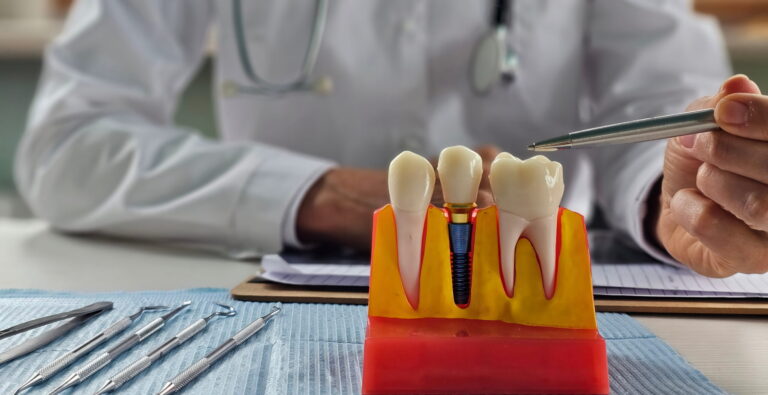
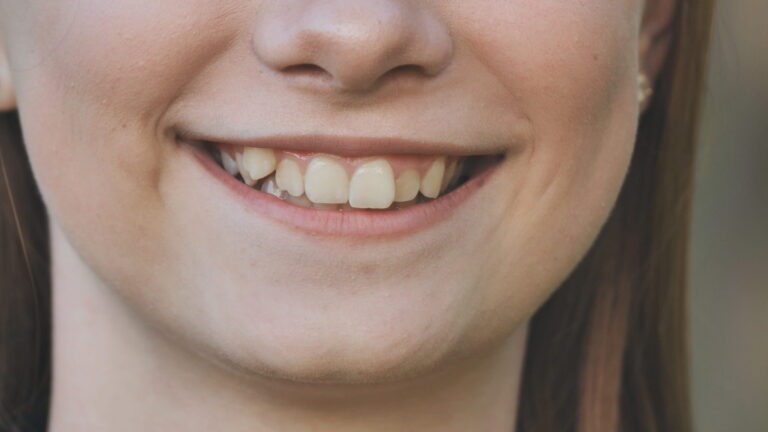
Teeth malocclusion is a misaligned bite, which means the upper and lower teeth do not meet the way they should when you close your mouth. The word simply describes teeth and jaws that sit out of their ideal position, whether that shows up as crowding, gaps, or teeth that overlap in the wrong direction.
At Lawen Dentistry in Halifax, Dr. Danny Lawen, D.D.S., is a Blue Diamond Invisalign Provider (‘Blue Diamond’ Invisalign provider is a status awarded by Align Technology to dental practices that treat a high volume of patients, typically over 300 patients a year).
A simple definition of a misaligned bite
In a healthy bite, the upper teeth rest slightly over the lower teeth, and the points of the back teeth fit neatly into the grooves of the opposing teeth. When that relationship is off, dentists call it malocclusion. It can be mild and barely noticeable, or it can be pronounced enough to affect how you eat, speak, and care for your smile. A misaligned bite is very common, so if you have noticed it in your own mouth, you are far from alone.
How common is malocclusion?
Malocclusion is one of the most widespread dental concerns worldwide. A large review of studies found that misaligned bites affect a significant share of children, teens, and adults across every stage of tooth development, as reported in this worldwide prevalence review. Rates vary by region and by how the bite is measured, but the takeaway is consistent: some degree of misalignment is extremely common, and only a portion of cases are severe enough to affect daily function.
The Main Types of Malocclusion
Malocclusion is usually grouped into three broad classes based on how the upper and lower molars meet, with a few additional patterns that can appear on their own or alongside these classes. Understanding your type helps guide the right plan for your smile.
Class 1: neutral bite with crowding or spacing
Class 1 is the most common pattern. Here, the bite relationship between the upper and lower molars is close to ideal, but the individual teeth may be crowded, rotated, or spaced too far apart. Because the jaws line up reasonably well, Class 1 concerns often respond nicely to gentle tooth movement with clear aligners.
Class 2: overbite (retrognathism)
Class 2 malocclusion describes an overbite, where the upper teeth and jaw sit noticeably ahead of the lower teeth. This can make the lower jaw look set back. An overbite can cause the front teeth to overlap more than they should, which sometimes affects how the front teeth wear over time.
Class 3: underbite (prognathism)
Class 3 malocclusion is an underbite, where the lower teeth and jaw extend past the upper teeth. This gives the appearance of a lower jaw that pushes forward. Underbites can influence chewing and speech and may benefit from early evaluation.
Other issues: crossbite, open bite, and crowding
Beyond the three classes, several patterns often show up on their own:
- Crossbite: one or more upper teeth close inside the lower teeth instead of outside them.
- Open bite: the upper and lower front teeth do not touch even when the back teeth are closed.
- Crowding: there is not enough room in the jaw, so teeth twist or overlap.
- Spacing: gaps appear between teeth, sometimes from missing teeth or a mismatch in tooth and jaw size.
What Causes Malocclusion?
Malocclusion usually results from a mix of inherited traits and habits or events during childhood. In many cases, more than one factor plays a role, which is why each person’s bite is a little different.
Genetic and inherited factors
Genetics is one of the most influential causes. The size and shape of your jaw, the size of your teeth, and how they fit together are often passed down through families. If a parent had crowding or an overbite, a child may inherit a similar tendency. A clinical overview of malocclusion notes that inherited jaw and tooth relationships are a leading contributor, as described in the reference on malocclusion.
Childhood habits and early tooth loss
Habits during early childhood can shape how teeth and jaws develop. Prolonged thumb sucking, extended pacifier use, and long-term bottle feeding can gently push developing teeth out of position. Losing baby teeth too early, before the adult teeth are ready, can also allow neighbouring teeth to drift and take up space meant for permanent teeth.
Jaw development and other contributing factors
Differences in how the upper and lower jaws grow can lead to a bite that does not line up. Other factors include mouth breathing, certain injuries, and a mismatch between tooth size and jaw size. Because these influences build over time, small changes are often easier to guide when they are noticed early.
Signs and Symptoms to Watch For
The clearest sign of malocclusion is teeth that look crowded, gapped, or overlapping, but there are several other clues that your bite may be misaligned. Recognizing these early helps you decide when to seek advice.
Common signs of a misaligned bite
- Teeth that appear crooked, crowded, or spaced apart.
- Upper and lower teeth that do not meet evenly when you bite down.
- Frequent biting of the cheek or tongue.
- Difficulty chewing certain foods comfortably.
- Changes in speech, such as a lisp.
- Teeth that feel like they wear unevenly.
When to visit your dentist in Halifax
Answer first: it is worth booking a visit whenever a bite concern affects comfort, chewing, speech, or your confidence in your smile. A dental exam can identify the type of malocclusion and rule out related concerns, such as difficulty keeping certain teeth clean. If you are unsure whether your bite needs attention, a consultation is a low-pressure way to get clear information tailored to you.
Why Treating Malocclusion Matters
Treating malocclusion matters because a well-aligned bite is easier to keep clean and more comfortable to use every day. Beyond appearance, alignment plays a practical role in long-term oral health.
Effects on chewing, speech, and cleaning
When teeth do not line up, chewing can become uneven, which places extra stress on some teeth. Certain speech sounds may also be harder to form. Crowded or overlapping teeth create tight spaces that are difficult to reach with a toothbrush and floss, which can raise the risk of plaque buildup in those areas.
How treatment can support long-term oral health
Correcting alignment can make daily cleaning simpler and help spread biting forces more evenly across your teeth. Guidance on managing malocclusion supports the value of treatment for both comfort and function, as outlined in the review of treatment effectiveness. The goal is a bite that works well and is easier to maintain for years to come.
Treatment Options for Malocclusion
Malocclusion can be corrected with several approaches, and the right one depends on the type and degree of misalignment. The two most common paths are clear aligners and traditional braces.
Clear aligners with Invisalign
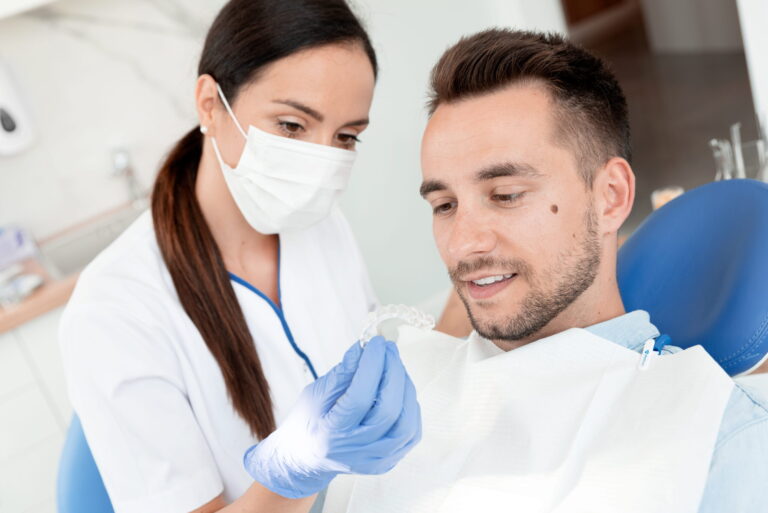
Clear aligners such as Invisalign use a series of custom, removable trays that gently move teeth into position over time. Each tray shifts the teeth a small amount, and you progress through the series as your smile changes. Many people appreciate that the trays are clear and low profile.
Traditional braces and other approaches
Traditional braces use brackets and wires to guide teeth, and they remain a reliable option for a wide range of bite concerns, including more complex cases. Depending on your situation, a dentist may recommend braces, aligners, or a combination with other supportive treatments. Evidence continues to support a personalized approach that matches the method to the individual bite, as discussed in this review of clinical approaches.
Treatment timelines and what to expect
| Concern | Common approach | General timeline |
|---|---|---|
| Mild crowding or spacing | Clear aligners | Often shorter |
| Overbite or underbite | Aligners or braces | Varies by case |
| Complex bite concerns | Braces or combined plan | Often longer |
Timelines depend on your starting point and how closely the plan is followed. Your dentist will share a realistic estimate after examining your teeth.
Invisalign at Lawen Dentistry in Halifax
At Lawen Dentistry in Halifax, Invisalign is a comfortable, discreet way to address many types of malocclusion. Dr. Lawen has been an Invisalign provider since 2006 and holds Blue Diamond provider status, which reflects his ongoing experience with clear aligner care.
How Invisalign works for a misaligned bite
Invisalign uses a planned series of clear, custom aligners designed from a digital scan of your teeth. Each set applies gentle, controlled pressure to move specific teeth, and you move through the series in order. The aligners are made to fit your mouth precisely, which supports steady progress toward a more even bite.
Aligner wear time and treatment length
For the process to work as intended, aligners should be worn 24 hours a day and only taken out for your oral hygiene routine. Consistent wear is one of the most important parts of a smooth result. Most treatment plans run between 6 and 12 months, though your exact length depends on your bite and how consistently you wear your aligners.
Consultation and scan
We review your bite, discuss your goals, and take a digital scan of your teeth.
Custom plan
Your aligner series is designed to move your teeth toward a healthier position.
Wear and progress
You wear each set 24 hours a day, except during oral hygiene, and switch trays as directed.
Review and finish
We check your progress along the way and help you maintain your new smile.
What to expect during your consultation
Your first visit is relaxed and informative. We will examine your teeth, talk through the type of malocclusion you have, and explain whether Invisalign suits your needs. You will have time to ask questions about wear time, timelines, and daily care. To learn more or to book, call us at +1 902-424-1888.
Ready to take the next step?
Schedule a consultation with Lawen Dentistry – Spring Garden Road in Halifax. Call +1 902-424-1888.
A Halifax native, Dr. Danny Lawen, D.D.S., has built his career around a lifelong passion for dentistry. He studied Chemistry at Dalhousie University for his undergraduate degree, graduating with distinction, then continued at Dalhousie’s dental school, earning his Doctor of Dental Surgery in 2003 and finishing fourth in his class. During his training, he took part in a dental implant elective and was honored with awards in periodontology and dental biomaterials.
After dental school, Dr. Lawen completed a general practice residency in London, Ontario, where he honed his skills in oral surgery, including wisdom tooth extractions. He then worked as an associate dentist at Cosmo Dental Centre in London before returning home to Halifax.
Dr. Lawen’s practice today centers on cosmetic dentistry, dental implants, and Invisalign, and he’s continued building his expertise through advanced training at institutions such as the Kois Center, the Dawson Academy, and the Misch International Implant Institute, among others. He’s also pursued specialized instruction in oral plastic surgery and gum grafting, cosmetic restorative techniques, and Botox training.
He holds memberships in several professional organizations, including the Canadian Dental Association, the Nova Scotia Dental Association, and the International Congress of Oral Implantologists. An Invisalign provider since 2006 at Lawen Dentistry in Halifax, Dr. Danny Lawen, D.D.S., is a Blue Diamond Invisalign Provider (a status awarded by Align Technology to dental practices that treat a high volume of patients, typically over 300 patients a year, reflecting the depth of experience he brings to every case).
Outside the office, Dr. Lawen is a family man and an active one – he enjoys travel, cycling, and basketball, and shares his life with his wife, Olivia, and their five children.
Frequently asked questions
Q: What is teeth malocclusion?
Teeth malocclusion is a misaligned bite in which the upper and lower teeth do not meet correctly when the mouth is closed. It can appear as crowding, gaps, overbites, underbites, or crossbites, and it ranges from mild to more noticeable.
Q: What are the different types of malocclusion?
Malocclusion is grouped into three main classes based on how the molars meet: Class 1 is a fairly even bite with crowding or spacing, Class 2 is an overbite, and Class 3 is an underbite. Additional patterns include crossbite, open bite, crowding, and spacing.
Q: What causes malocclusion of the teeth?
Malocclusion often results from inherited jaw and tooth size, along with childhood habits such as prolonged thumb sucking or early loss of baby teeth. Differences in jaw growth and mouth breathing can also contribute, and several factors frequently combine.
Q: Can Invisalign fix malocclusion?
Invisalign can help correct many types of malocclusion, including crowding, spacing, and certain overbites and underbites, using a series of custom clear aligners. Suitability depends on your specific bite, which a dentist can assess during a consultation.
Q: How long does Invisalign treatment for malocclusion take?
Most Invisalign treatment plans take between 6 and 12 months. The exact length depends on the type and degree of your misalignment and how consistently you wear your aligners each day.
Q: How many hours a day should I wear my aligners?
You should wear your aligners 24 hours a day and only take them out for your oral hygiene routine. Consistent wear is one of the most important factors in keeping your treatment on schedule.
At Lawen Dentistry in Halifax, Dr. Danny Lawen, D.D.S., is a Blue Diamond Invisalign Provider (‘Blue Diamond’ Invisalign provider is a status awarded by Align Technology to dental practices that treat a high volume of patients, typically over 300 patients a year).
Want to schedule an appointment now? Follow our directions, use this helpful Google Maps link, or get step-by-step navigation via Get Directions.
Remember: Wear your Invisalign aligners 24 hours a day, except during your oral hygiene routine, to help your treatment stay on track.
Disclaimer: This article is for general information only and does not replace a personal exam; please consult Dr. Lawen for advice suited to your smile.